martes, 13 de mayo de 2025

“CONGRATULATIONS" - CLIFF RICHARD


La canción que tenemos aquí no ganó el festival de Eurovisión del año 1968, pero creo que a nadie le resultará desconocida. El documento sigue la estructura habitual con links de la canción, letra, información sobre pronunciación de algunas palabras y vocabulario e información sobre la canción y el intérprete. Al final se ha incluido, a modo de repaso, el uso del verbo WANT con enlaces a dos páginas web que permiten escuchar (listening) los ejemplos. Ánimo y, si queréis bailar, adelante, pero hacedlo en inglés, por favor.

LINKS


Cliff Richard – Congratulations. Actuación en un programa de TV. Mejor sonido.

https://www.youtube.com/watch?v=us3dQ0nnlHY


Cliff Richard; Congratulations Lyrics

https://www.youtube.com/watch?time_continue=14&v=RGitYm8XId4&feature=emb_logo

 LYRICS:          " Congratulations "


Congratulations and celebrations
When I tell everyone that you’re in love with me
Congratulations and jubilations
I want the world to know I’m happy as can be


Who would believe that I could be happy and contented?
I used to think that happiness hadn’t been invented
But that was in the bad old days before I met you
 When I let you walk into my heart


Congratulations and celebrations

When I tell everyone that you’re in love with me
Congratulations and jubilations
I want the world to know I’m happy as can be


I was afraid that maybe you thought you were above me
That I was only fooling myself to think you’d love me
But then tonight you said you couldn’t live without me
That round about me, you wanted to stay


Congratulations and celebrations
When I tell everyone that you’re in love with me
Congratulations and jubilations
I want the world to know I’m happy as can be


Congratulations and jubilations
I want the world to know I’m happy as can be


I want the world to know I’m happy as can be

 Felicitaciones y celebraciones

Cuando les digo a todos que estás enamorada de mi
Felicitaciones y júbilo
Quiero que el mundo sepa que soy tan feliz como se puede ser.

¿Quién podría creer que podía estar feliz y satisfecho

Yo solía pensar que la felicidad no había sido inventada
Pero eso fue en los viejos tiempos antes de que te conociera
Cuando te dejé / permití entrar en mi corazón

Felicitaciones ...


Tenía miedo de que tal vez pensaras que estabas por encima de mí
Que sólo estaba engañándome  a mí mismo por pensar que tú me amarías
Pero entonces, esta noche dijiste que no podrías vivir
sin mí
Que alrededor de mí, tu querias quedarte

Felicitaciones ...


Felicitaciones y júbilo

Quiero que el mundo sepa que soy tan feliz como se puede ser

Quiero que el mundo sepa que soy tan feliz como se puede ser

 PRONUNCIACIÓN. TRANSCRIPCIÓN FONÉTICA.

Congratulations /kənˌɡrætjʊˈleɪʃənz/

Celebration        /ˌsɛlɪˈbreɪʃən/

Jubilation  /ˌdʒuːbɪˈleɪʃən/

Contented          /kənˈtɛntɪd/


VOCABULARY

be in love vi + adj

(infatuated)

estar enamorado loc verb


People who are in love never listen to anyone else's advice. La gente que está enamorada nunca escucha los consejos de los demás.

The two of them are in love, and they spend every moment together.

be in love with [sb] v expr

(be infatuated)

estar enamorado de loc verb


He's so thoughtful! I am in love with him. ¡Es tan considerado! Estoy enamorada de él.

contented adj

(satisfied) (happy)

contento/a, satisfecho/a adj


Overall, Ruby was contented with her situation in life.

could⇒ v aux

(can: past tense) (pretérito imperfecto)

podía, podías, podía, podíamos, podíais, podían vtr


 (pretérito perfecto simple)

pude, pudiste, pudo, pudimos, pudisteis, pudieron vtr

could v aux

(polite request) (condicional simple)

podría, podrías, podría, podríamos, podríais, podrían vtr


Could you hold this for me, please? ¿Podrías sostener esto por mí, por favor?

could v aux

(ability) (condicional simple)

podría, podrías, podría, podríamos, podríais, podrían vtr


I could go to the store if I wanted to. Si quisiera, podría ir a la tienda.

could v aux

(possibility) (condicional simple)

podría, podrías, podría, podríamos, podríais, podrían vtr


He could be right. Podría tener razón.

could v aux

(polite suggestion) (condicional simple)

podría, podrías, podría, podríamos, podríais, podrían vtr


You could call them and ask. Podrías llamarlos y preguntar.

fool [sb]⇒ vtr

(deceive)

engañar⇒ vi  (ES, coloquial)liar⇒ vtr


She fooled him into believing that she was younger. Lo engañó haciéndole creer que era más joven.

myself pron

(reflexive)

mí mismo pron


I told myself to try to complete the job. Me dije a mí mismo que debía intentar terminar el trabajo.

(Información obtenida de la página:  https://www.songfacts.com/facts/cliff-richard/congratulations )


This came in #2 in the Eurovision Song Contest, losing out by just one vote to Massiel representing Spain with "La La La."


This was written by Bill Martin and Phil Coulter, who the previous year penned Sandie Shaw's Eurovision-winning song "Puppet On A String."


As well as the English version, Cliff recorded it in French, German and Spanish.


ABOUT THE SONG

(Información obtenida de la página: https://en.wikipedia.org/wiki/Congratulations_(Cliff_Richard_song) )

"Congratulations" is a song recorded by British singer Cliff Richard. The song was written by Bill Martin and Phil Coulter.[1] It is best known as the British entry at the Eurovision Song Contest 1968, held in London.

The song was arranged, conducted and produced by Norrie Paramor who was also musical director for the contest, which was held at London's Royal Albert Hall.[2]

Phil Coulter originally wrote the song as "I Think I Love You", but was unsure of the lyrics and got together with Bill Martin (the same team that wrote "Puppet on a String"), who changed it to "Congratulations".[3]

The song was immediately popular in the UK and became a number one single. On the day of the contest, it was the favourite to win, so much so that the British press were posing the question: "What will come second to 'Congratulations'?"[4]

During the voting, "Congratulations" was leading for much of the way until the penultimate vote when Germany gave Spain six points, putting them one point ahead of the United Kingdom.[5] It finished second losing to Spain's entry "La, la, la" by just one point. However, "Congratulations" went on to become a far more successful song and a huge hit throughout Europe.

 ABOUT THE SINGER

(Información obtenida de la página: https://en.wikipedia.org/wiki/Cliff_Richard)

Sir Cliff Richard OBE (born Harry Rodger Webb; 14 October 1940) is a British singer, musician, performer, actor and philanthropist. Richard has sold more than 250 million records worldwide.[1] He has total sales of over 21 million singles in the United Kingdom and is the third-top-selling artist in UK Singles Chart history, behind the Beatles and Elvis Presley.[2]

Richard was originally marketed as a rebellious rock and roll singer in the style of Elvis Presley and Little Richard.[3] With his backing group, the Shadows, Richard dominated the British popular music scene in the pre-Beatles period of the late 1950s to early 1960s.[4] His 1958 hit single "Move It" is often described as Britain's first authentic rock and roll song; in the opinion of John Lennon of the Beatles, "before Cliff and the Shadows, there had been nothing worth listening to in British music". Increased focus on his Christianity and subsequent softening of his music led to a more middle-of-the-road image and he sometimes ventured into contemporary Christian music.

(Información obtenida de la página: https://www.cliffrichard.org/career/ )

1968.- A Year In The Career

Cliff represented Britain in the Eurovision Song Contest and failed by one point to take the top place. However, his song "CONGRATULATIONS" topped the charts in the U.K. and many other countries (including Germany where it stayed at No. 1 for seven weeks), and sold over one million copies, giving him his fifth Gold Disc. Cliff played some Gospel concerts, including one at Coventry Cathedral and a special party was held to celebrate his 10th anniversary as a star. It begun to be apparent that Cliff and The Shadows would go their separate ways.


Dado que alguno/a de vosotros/as recordaréis la versión española, aquí la tenéis, pero tened en cuenta que es una versión, no una traducción. También se ofrece esta versión por la puesta en escena de aquellos años que resulta curiosa hoy día. Hay que considerar que estas versiones en idiomas diferentes al original se hacías por una cuestión de rentabilidad económica, ni mucho menos mejoran la canción original, en el caso de que hubiera posibilidad de hacerlo.


Cliff Richard - Congratulations (Español - Spanish)

https://www.youtube.com/watch?v=pM0kY9B_Ii8


USO DEL VERBO WANT

 “I want the world to know”                    WANT


Información obtenida de la página : http://inglesmadrid.com/ingles-online2a.htm

1. «Want» (en castellano: «querer» ) es un verbo regular

Presente: I want, you want, he/she/it wants, we want, you want, they want

Pasado: I wanted, you wanted, he/she/it wanted etc.


2.  «Want» + sustantivo

  • I want money!                         ¡Quiero dinero!
  • Quiero un coche.                     I want a car.


3.  «Want» + verbo

Cuando usamos ‘want’ con otro verbo la estructura de la oración es:  SUJETO + WANT + «TO» + INFINITIVO

Unos ejemplos de ‘want’ con un verbo:

  • I want to sleep.                                   Quiero dormir.
  • Sara wanted to play.                Sara quería jugar.


4.  Si quieres que OTRA PERSONA haga algo(i)

¡Prestad atención porque es diferente al castellano! En inglés no usamos el subjuntivo (¡porque no tenemos ninguno!) sino el infinitivo:

  • Sara wants James to play.                              Sara quiere que James juegue.
  • Jose wants Chris to drive.                               Jose quiere que Chris conduzca.
  • Sara wanted James to play.                            Sara quería que James jugara.
  • Jose wanted Chris to drive.                             Jose quería que Chris condujera.

El segundo verbo siempre tiene la forma «to + infinitivo». No importa el tiempo verbal del primer verbo.


5.  Si quieres que OTRA PERSONA haga algo(ii): pronombres

Cuando usamos pronombres, tienen que ser los pronombres objeto (me, you, it, her, him, us, you, them):

Aquí veremos las mismas frases que en la sección #4, pero ahora con pronombres en vez de los nombres:

  • Sara wants James to play.       èè   èè   Sara wants him to play.
  • Jose wants Lola to drive.        èè   èè   Jose wants her to drive.
  • Sara wanted John and Lola to play.    èè   Sara wanted them to play.
  • Jose wanted Sara and Lola to drive.   èè   Jose wanted them to drive.


6.  Frases negativas con ‘want’

Para formamos frases negativas necesitamos los verbos auxiliares. Todo depende del tiempo verbal que usamos.

Unos ejemplos con sustantivos:

  • I do not want this hamburger.                No quiero esta hamburguesa.
  • She does not want help.                                   No quiere ayuda.
  • I did not want coffee.                            No quería café.

Obviamente, solemos usar las contracciones de los verbos auxiliares:

  • I don’t want this hamburger.
  • She doesn’t want help.
  • I didn’t want coffee.


Cuando ‘want’ va con otro verbo, la forma de las frases negativas es lo mismo:

  • I don’t want to go                     No quiero ir.
  • She won’t want to come.          Ella no querrá venir.


7.  Otros verbos que siguen las mismas reglas:

  • need
  • would like

En el siguiente enlace puedes encontrar información sobre la pronunciación de WANT / WANTO TO (wan-na) y un par de canciones que propone el autor:        http://inglesmadrid.com/ingles-online2b.htm


Congratulations by Cliff Richard lyrics

https://www.youtube.com/watch?v=8TTk55YFIwI

 Cliff Richard - Congratulations (United Kingdom ESC 1968).- Imágenes del festival de Eurovisión. Sonido deficiente

https://www.youtube.com/watch?v=23ZG6HJVKuQ
 

domingo, 4 de mayo de 2025

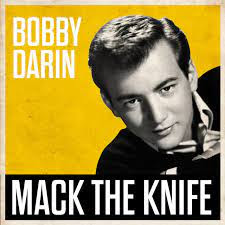
MACK THE KNIFE Bobby Darin


Kurt Weill and Bertolt Brecht wrote this song in 1928 for the German play The Threepenny Opera. "Mack" is Macheath, the title character, portrayed as a criminal. The light melody can make this feel like an upbeat song, but it contrasts sharply with the lyrics, which are about a murderer.

Si, la composición original es en alemán.


Darin decided to perform this song when he saw a production of The Threepenny Opera in Greenwich Village in 1958. He thought up his own way of presenting the song, and started performing it in his nightclub act, where it was well received. The song was included on Darin's album That's All, which was released in March 1959. In May of that year, Darin's "Dream Lover" became a huge hit, and demand was building for "Mack The Knife," which was growing increasingly popular thanks to Darin's nightclub performances and sales of the album.

The original German lyrics were far more graphic, making it clear that this is a murderer we're talking about. For American audiences, the translation was more ambiguous to soften the killings, essential in eluding censors in the conservative 1950s.

The original German version of this song is called "Theme from The Threepenny Opera," or "Moritat," which is the German word for "Murder Ballad." The lyrics have been translated in various ways on different versions, but the most popular translation was by the lyricist Marc Blitzstein for the 1954 off-Broadway revival of The Threepenny Opera, which ran until 1961 and played in Greenwich Village, New York.

Lyrics

Darin, however, had a teen idol image to uphold, and a song from the '20s about a murderous sot could derail that train quickly. He was recording for Atlantic Records, who made lots of good decisions, and label boss Ahmet Ertegun ordered it released as a single. Finally, in late August, the single came out and was a massive hit. Whatever teen idol cred Darin scrubbed, he more than made up for in adult appeal, as the song introduced him to an audience that went well beyond "Splish Splash." He became a regular on various TV shows, played a lot of high-end resorts and became the youngest headliner at the Sands Hotel in Las Vegas, where he was once a busboy. The song's success also earned him a second spot on The Ed Sullivan Show, where he made a total of six appearances.

The translated lyrics from the production are what Louis Armstrong used in his 1956 version of the song and most of what Darin used in his.


The BBC Radio 4 program, Ella in Berlin, recalled a famous concert appearance by Ella Fitzgerald in February 1960 in Berlin when the American performed this song for the first time. 


Ella had learned the words on the plane from Stockholm, but halfway through her performance, she forgot the lyrics and began to improvise exuberantly in rhyme. The Queen of Jazz never missed a beat, making it clear she was making it up as she went along:

Oh what's the next chorus, to this song, now
This is the one, now I don't know
But it was a swinging tune and it's a hit tune
So we tried to do Mack the Knife

Oh Bobby Darin and Louis Armstrong
They made a record, oh but they did
And now Ella, Ella, and her fellas
We're making a wreck, what a wreck of Mack the Knife


It may have been a wreck, but the crowd loved it - many in the audience didn't speak English anyway. Released as a single, this was the last version of the song to chart, coming in at #27 in June


Jimmy Buffett sang this as a duet with Frank Sinatra for Sinatra's 1994 Duets II album. The two didn't share a studio session, though. Like the other duets on the album, Buffett's part was added to Sinatra's already recorded vocals.


LYRICS

MACK THE KNIFE  Canción de Bobby Darin

Oh, the shark, babe, has such teeth, dear
And it shows them pearly white
Just a jackknife has old MacHeath, babe
And he keeps it, ah, out of sight
You know when that shark bites with his teeth, babe
Scarlet billows start to spread
Fancy gloves, oh, wears old MacHeath, babe
So there's never, never a trace of red

Now on the sidewalk, huh, huh, whoo sunny morning, un huh
Lies a body just oozin' life, eek
And someone's sneakin' 'round the corner
Could that someone be Mack the Knife?

There's a tugboat, huh, huh, down by the river don'tcha know
Where a cement bag's just a-drooppin' on down
Oh, that cement is just, it's there for the weight, dear
Five'll get ya ten, old Macky's back in town
Now did ya hear 'bout Louie Miller? He disappeared, babe
After drawin' out all his hard-earned cash
And now MacHeath spends just like a sailor
Could it be our boy's done somethin' rash?

Now Jenny Diver, ho, ho, yeah, Sukey Tawdry
Ooh, Miss Lotte Lenya and old Lucy Brown
Oh, the line forms on the right, babe
Now that Macky's back in town

I said Jenny Diver, whoa, Sukey Tawdry
Look out to Miss Lotte Lenya and old Lucy Brown
Yes, that line forms on the right, babe
Now that Macky's back in town
Look out, old Macky's back

Robbie Williams Live at The Royal Albert


VOCABULARY

Billow   noun  /ˈbiləu/   literary  .- a large wave  = oleada

Fancy  adjective  UK  /ˈfæn·si/ .- expensive and fashionable  =  elegante  Ex.- a fancy restaurant

 Fancy  adjective  UK  /ˈfæn·si/ .- complicated or having a lot of decoration = sofisticado Ex.- That dress is too fancy for a little girl.

Fancy  adjective  UK  /ˈfæn·si/ .- comparative fancier | superlative fanciest.- expensive and of high quality = caro/ra , lujoso/sa

 Fancy verb UK informal .- to want to have or do something = tener ganas de Ex.- Do you fancy a drink?

 Fancy verb UK informal .- to feel sexually attracted to someone = sentirse atraído por Ex.-I fancied him the first time I saw him.

Trace verb UK  /treɪs/ .- to find someone or something that was lost = localizer Ex.- Police are trying to trace the missing woman.

 Trace  noun  UK  /treɪs/ .- proof that someone or something was in a place = rastro Ex.- There was no trace of her anywhere.

Ooze  verb  UK  /uːz/ .- If a liquid oozes from something, it comes out slowly. = rezumar Ex.- Blood was oozing out of the wound.

Ooze  verb  UK  /uːz/ .-  informal .- to show a lot of a quality = rebosar Ex.- He oozes charm.

Sneak  verb UK  /sniːk/  .- to go somewhere quietly because you do not want anyone to hear you = ir sigilosamente Ex.- I sneaked into his bedroom while he was asleep.

Sneak  verb UK  /sniːk/  .-past, past participle sneaked(snuck) .- to move somewhere quietly so that people do not notice you = ir a hurtadillas, andar con sigilo, moverse sigilosamente Ex.- They sneaked past the doorway and up the stairs. (Se movieron sigilosamente por la puerta y subieron las escaleras.)

tug-boat  noun .- a small boat with a very powerful engine, for towing larger ships. = remolcador

rash  adjective  UK  /ræʃ/ .- done suddenly and without thinking carefully = precipitado = It was a rash decision.


La siguiente versión está interpretada por el granadino Miguel Rios, en español.


Por último, como curiosidad, dos interpretaciones de la composición original en alemán. Una interpretada por Sting y otra corresponde a la parte representada de The Threepenny Opera.


Los comentarios sobre esta canción se han recogido en la siguiente dirección

https://www.songfacts.com/facts/bobby-darin/mack-the-knife


Aclarando la historia de la canción.... obtenida del blog:

https://chelseahotel.blog/mack-the-knife/

MACK THE KNIFE

Louis Armstrong

Nace el dramaturgo Bertolt Brecht (1898)

Mack the Knife tiene una historia tan larga y accidentada como la que cuenta la propia canción. La primera vez que apareció este personaje de este tema fue en La Ópera del Mendigo, una obra escrita por John Gay en 1728 y protagonizada por un bandolero llamado Macheath. Pero no fue hasta dos siglos más tarde, cuando el dramaturgo alemán Bertolt Brecht decidió hacer su adaptación, que el relato de la vida de este criminal empezó a popularizarse.

Brecht la tituló La Ópera de los Tres Centavos y, en colaboración con el compositor Kurt Weill, actualizó el guión y la música para convertirla en una crítica marxista del mundo capitalista. Al personaje de Macheath le mantuvo el nombre, pero le dió el apodo de Mackie Messer (Mackie, el Navaja) a la vez que lo presentaba como más cruel y siniestro que el original.

Pocos días antes del estreno, en agosto de 1928, el actor que hacía el papel protagonista pidió que le hicieran una canción de presentación del personaje para suavizar su entrada en escena. Como respuesta a esta petición, le escribieron un «moritat», una balada de origen medieval que hasta principios del S.XIX se utilizaba para relatar las fechorías de un criminal. Brecht se encargó de la letra, que en boca de un cantante callejero, repasaba todo el historial delictivo de Macheath. Y sobre ella, Weill compuso una única melodía de dieciséis compases que se iba repitiendo a lo largo de todo el tema.

El musical y su posterior versión cinematográfica fueron un éxito. Pero este tema introductorio que todo el mundo conocía ya como Mackie Messer todavía lo fue más. Tanto, que acabó convirtiéndose en una de las piezas más interpretadas en los cabarets del Berlín de entreguerras. No obstante, con la llegada del nazismo, Weill y Brecht tuvieron que huir de Alemania y la canción quedó en el olvido durante más de dos décadas.

En su exilio, Kurt Weill se había instalado en Nueva York con su mujer. Allí la pareja coincidió con Marc Blitzstein, un compositor que admiraba mucho la obra de Weill y Brecht. Así que cuando el primero de ellos murió en 1950, Blitzstein decidió coger los temas de La Ópera de los Tres Centavos y hacer la adaptación al inglés. La obra se estrenó a los cuatro años con un éxito de taquilla discreto. Pero el azar quiso que a una de las representaciones asistiera el productor discográfico George Avakian, que rápidamente se dio cuenta de que aquel «moritat» que Blitzstein ya había rebautizado como Mack the Knife tenía un gran potencial como canción instrumental de jazz. La ofreció a varios artistas reconocidos pero nadie quería hacerla. Hasta que la propuesta llegó a Louis Armstrong. El músico se entusiasmó tanto con el tema que, aparte de tocarlo con la trompeta, también lo quiso cantar.

La versión de Armstrong se convirtió en la base a partir de la cual numerosos artistas han hecho sus propias versiones del tema. La más aclamada fue la de Bobby Darin que, en 1959, la llevó a lo más alto de las listas de éxitos. Pero también la interpretaron Bing Crosby, Ella Fitzgerald o Frank Sinatra, que al final de su carrera a menudo la utilizaba como canción de cierre de sus conciertos. En el mundo latino, el músico panameño Rubén Blades fue quien hizo la versión en español con un Pedro Navaja delinquiendo a ritmo de salsa.


Como siempre, a continuación tienes algunas direcciones de videos ya que hay veces que no se pueden ver los incluidos arriba.

Bobby Darin "Mack The Knife" on The Ed Sullivan Show. Subt. Español.

https://www.youtube.com/watch?v=557lFG-qq5g

https://youtu.be/557lFG-qq5g


Bobby Darin - Mack the Knife (Lyrics On-Screen and in Description)

https://www.youtube.com/watch?v=h8iPUK0AGRo

https://youtu.be/h8iPUK0AGRo


Mack the Knife by Louis Armstrong

https://www.youtube.com/watch?v=28ULUQgxJ5M

https://youtu.be/28ULUQgxJ5M


Mack The Knife - Robbie Williams Live at The Royal Albert

https://www.youtube.com/watch?v=XpkCazstUhM

https://youtu.be/XpkCazstUhM


Ella Fitzgerald - Mack The Knife

https://www.youtube.com/watch?v=wYaEVSjg5BE

https://youtu.be/wYaEVSjg5BE


Frank Sinatra ~ Mack The Knife - rare live television performance from 1986

https://www.youtube.com/watch?v=brL-2vzpUyQ

https://youtu.be/brL-2vzpUyQ


Mack The Knife (original). 

Here's the original song 'Die Moritat von Mackie Messer' from the 'Threepenny opera' sung by Bertolt Brecht

https://www.youtube.com/watch?v=_QXJ3OXWaOY

https://youtu.be/_QXJ3OXWaOY


Mack The Knife - The Threepenny Opera (2016). Original en alemán.

https://youtu.be/avuBkiIpemg

https://www.youtube.com/watch?v=avuBkiIpemg


Sting sings Brecht Die Moritat vom Räuber Mackie Messer (Musik Kurt Weill) Dreigroschenoper

https://www.youtube.com/watch?v=YokJ2BbdwdU

https://youtu.be/YokJ2BbdwdU


domingo, 20 de abril de 2025

CAN'T TAKE MY EYES OFF YOU - FRANKIE VALLI


«Can't Take My Eyes Off You» —en español: «No puedo dejar de mirarte»— es una canción publicada en 1967, escrita por Bob Crewe y Bob Gaudio, con arreglos de Artie Schroeck y Gaudio,2​ e interpretada originalmente por Frankie Valli. La canción fue uno de sus mayores éxitos, llegando al segundo puesto entre las 100 canciones del Billboard en 19673​ y ganando un disco de oro.1​ Fue uno de los muchos éxitos que Valli grabó con la participación de su grupo "The Four Seasons".


LYRICS

Can't Take My Eyes off You  Canción de Frankie Valli

You're just too good to be true
Can't take my eyes off of you
You'd be like Heaven to touch
I wanna hold you so much
At long last, love has arrived
And I thank God I'm alive
You're just too good to be true
Can't take my eyes off of you.

Pardon the way that I stare
There's nothin' else to compare
The sight of you leaves me weak
There are no words left to speak
But if you feel like I feel
Please let me know that it's real
You're just too good to be true
Can't take my eyes off of you

I love you, baby
And if it's quite alright
I need you, baby
To warm the lonely night
I love you, baby
Trust in me when I say
Oh, pretty baby
Don't bring me down, I pray
Oh, pretty baby
Now that I've found you, stay
And let me love you, baby
Let me love you

You're just too good to be true
Can't take my eyes off of you
You'd be like Heaven to touch
I wanna hold you so much
At long last, love has arrived
And I thank God I'm alive
You're just too good to be true
Can't take my eyes off you

I love you, baby
And if it's quite alright
I need you, baby
To warm the lonely night
I love you, baby
Trust in me when I say
Oh, pretty baby
Don't bring me down, I pray
Oh, pretty baby
Now that I've found you, stay
Oh, pretty baby
Trust in me when I say
Oh, pretty baby

La siguiente versión tiene un acento íntimo. Para seguir la letra y practicar.


VOCABULARY

https://dictionary.cambridge.org/es/diccionario/ingles-espanol/

at (long) last .- in the end, especially after a long delay = por fin 

Ø Ex.Oh, there he is at (long) last!

stare  verb  UK  /steər/ .- to look straight ahead without moving your eyes = mirar fijamente

Ø Ex.- I just sat there, staring into space.  Ex.- staring eyes

quite  adverb UK  /kwaɪt/ .- a little or a lot but not completely = bastante, muy, mucho.

Ø Ex.- I’m quite tired, but I’m happy to walk a little further.

Ø Ex.- quite large/small/angry/ugly = bastante grande/pequeño/enfadado/feo

Ø Ex.- The wait was quite long. = La espera fue bastante larga.

quite like = gustar mucho

Ø Ex.-I hate most seafood, but I quite like prawns. =Odio la mayoría del marisco, pero me gustan mucho las gambas.

Otras versiones interpretadas por diferentes artistas. 

Gloria Gaynor


Lula Band


Daniel Boaventura


Raphael y Alaska . Versión en español/inglés


Además, abajo tienes algunas direcciones correspondientes a videos insertados arriba por si hay algún problema al visualizarlos.

Cant Take My Eyes Off You - Frankie Valli and The 4 Seasons

https://youtu.be/LcJm1pOswfM

https://www.youtube.com/watch?v=LcJm1pOswfM


Gloria Gaynor - Can't take my eyes off of you

https://youtu.be/vqLBh_IAIqY

https://www.youtube.com/watch?v=vqLBh_IAIqY


Morten Harket - Can't Take My Eyes Off You | Lyrics/Letra | Subtitulado al Español

https://youtu.be/Ai3CmHW3o7g

https://www.youtube.com/watch?v=Ai3CmHW3o7g


Daniel Boaventura - Can't Take My Eyes Off You (Ao Vivo)

https://youtu.be/ZOLhyTRQiSM

https://www.youtube.com/watch?v=ZOLhyTRQiSM


sábado, 5 de abril de 2025

Sway


Sway


Es la versión en inglés de la canción «¿Quién será?», interpretada originalmente por el compositor mexicano Luis Demetrio y Pablo Beltrán Ruiz en 1953.


When marimba rhythms start to play
Dance with me, make me sway
Like a lazy ocean hugs the shore
Hold me close, sway me more

Like a flower bending in the breeze
Bend with me, sway with ease
When we dance, you have a way with me
Stay with me, sway with me

Other dancers may be on the floor
Dear, but my eyes will see only you
Only you have that magic technique
When we sway, I go weak

I can hear the sounds of violins
Long before it begins
Make me thrill as only you know how
Sway me smooth, sway me now

Other dancers may be on the floor
Dear, but my eyes will see only you
Only you have that magic technique
When we sway, I go weak

I can hear the sounds of violins
Long before it begins
Make me thrill as only you know how
Sway me smooth, sway me now

When marimba rhythms start to play
Dance with me, make me sway
Like a lazy ocean hugs the shore
Hold me close, sway me more

Like a flower bending in the breeze
Bend with me, sway with ease
When we dance you have a way with me
Stay with me, sway with me

When marimbas start to play
Hold me close, make me sway
Like a lazy ocean hugs the shore
Hold me close, sway me more

Like a flower bending in the breeze
Bend with me, sway with ease
When we dance, you have a way with me
Stay with me, sway with me


VOCABULARY

sway /ˈsweɪ/ mecerse, balancearse, oscilar, bambolearse

ü  There was a strong wind and the trees were swaying.    Había un viento fuerte y los árboles se mecían.

lazy /ˈleɪzi/ adj ([sb]: does little) perezoso

ü  He is smart, but lazy.   Es inteligente, pero perezoso.

hug [sb] /ˈhʌg/ (embrace) abrazar a

ü  She hugged her brother when he returned.    Abrazó a su hermano cuando él volvió.

shore /ˈʃɔːr/ n   costa, orilla, litoral

ü  Karen stood on the shore watching the people swimming in the lake.  Karen se paró en la costa mirando a la gente nadar en el lago.

bend /ˈbɛnd/  inclinarse, doblarse

ü  Shawna bent to pick up the pen on the floor.   Shwana se inclinó para recoger el bolígrafo del piso.

ease /ˈiːz/ n(lack of difficulty) facilidad

ü  The ease with which he learns languages is amazing.  La facilidad con la que aprende idiomas es sorprendente.

go weak at the knees v expr (de atracción)        temblar las piernas loc verb

go weak at the knees v expr  (de emoción o miedo)      temblar las piernas loc verb

thrill /ˈθrɪl/ (feel excitement)   emocionarse, entusiasmarse

ü  The audience thrilled as the illusionist disappeared in a puff of smoke.

smooth /ˈsmuːð/ adj     (gentle)               suave adj mf

ü  The pilot made a smooth landing.  El piloto realizó un aterrizaje suave.


Versión de Michael Bublé


La siguiente versión está interpretada por Anita Kelsey con un matiz que nos lleva al jazz. Al más íntimo.


Esta interpretación de Daniel Boaventura introduce la versión original en español, junto con la versión en lengua inglesa. Como se ve, la letra no tiene nada que ver en ambas versiones.


Si quieres bailar, con el siguiente video puedes aprender.


Como siempre, anoto las direcciones de algunos videos por si no funciona la opción de insertar utilizada arriba.


Sway.   Michael Bublé

https://youtu.be/a90tZJHBklk

https://www.youtube.com/watch?v=a90tZJHBklk


Sway - Anita Kelsey

https://youtu.be/T2fPrrkMOZw

https://www.youtube.com/watch?v=T2fPrrkMOZw


Daniel Boaventura - Sway (Ao Vivo)

https://youtu.be/FhugrA3Ma5I

https://www.youtube.com/watch?v=FhugrA3Ma5I


michael buble - sway lyrics

https://youtu.be/lZM-5SYr2Yk

https://www.youtube.com/watch?v=lZM-5SYr2Yk